

Singapore LTA Car Solar Film Compliance Guide
Your complete 2026 guide to LTA-compliant solar film in Singapore
Book Appointment
Singapore LTA Car Solar Film Compliance Guide
Your complete 2026 guide to LTA-compliant solar film in Singapore
Book Appointment

● Know the rules, avoid fines, and tint your car the right way
LTA Solar Film Rules Every Singapore Driver Must Know in 2026
_______
Singapore’s Land Transport Authority (LTA) enforces strict solar film regulations to ensure road safety and driver visibility. Whether you are installing new car tint or replacing an existing one, understanding the legal limits is essential before your next inspection.
The key requirement is Final Combined Visible Light Transmission (VLT) — the total light passing through both your factory glass and applied film. LTA mandates a minimum of 70% VLT for windscreens and front side windows, while rear windows allow darker tints.
Getting this wrong risks failed inspections, fines, and potential insurance complications.
Beyond VLT limits, 2026 compliance also covers ERP 2.0 OBU windscreen compatibility, factory privacy glass considerations, and cross-border JPJ regulations for drivers travelling to Malaysia.
This guide covers everything you need to stay road-legal and tint smart in Singapore.
● Know the rules, avoid fines, and tint your car the right way
LTA Solar Film Rules Every Singapore Driver Must Know in 2026
_______
Singapore’s Land Transport Authority (LTA) enforces strict solar film regulations to ensure road safety and driver visibility. Whether you are installing new car tint or replacing an existing one, understanding the legal limits is essential before your next inspection.
The key requirement is Final Combined Visible Light Transmission (VLT) — the total light passing through both your factory glass and applied film. LTA mandates a minimum of 70% VLT for windscreens and front side windows, while rear windows allow darker tints.
Getting this wrong risks failed inspections, fines, and potential insurance complications.
Beyond VLT limits, 2026 compliance also covers ERP 2.0 OBU windscreen compatibility, factory privacy glass considerations, and cross-border JPJ regulations for drivers travelling to Malaysia.
This guide covers everything you need to stay road-legal and tint smart in Singapore.
Solar Film: LTA Rules, JPJ Compliance and
Cross-Border Travel
_______
Solar Film: LTA Rules, JPJ Compliance andCross-Border Travel
_______
Car solar film in Singapore is no longer just about appearance. In our climate, the inside of a parked vehicle can become dangerously hot within minutes. For many drivers, window film has become a practical upgrade for daily comfort, reducing cabin heat, glare, UV exposure, and strain during long hours on the road.
At the same time, automotive tint regulations in Singapore remain strict. Drivers who travel regularly between Singapore and Malaysia also face another layer of confusion because Singapore’s Land Transport Authority (LTA) rules are different from Malaysia’s Jabatan Pengangkutan Jalan (JPJ) requirements.
With Malaysia’s Vehicle Entry Permit (VEP) enforcement now active and Singapore transitioning to ERP 2.0 On-Board Units (OBU), many motorists are unsure what is actually legal, what affects inspection, and whether dark rear tint will create problems across the border.
The most common question remains:
If a Singapore car has rear tint darker than 50%, will it become a problem in Malaysia?
The answer depends mainly on whether the vehicle still complies with Singapore LTA regulations, particularly the final Visible Light Transmission (VLT) reading after the film is installed.
Singapore’s automotive tint regulations are based on Visible Light Transmission, commonly known as VLT.
VLT measures how much visible light passes through the original glass and the installed film together.
Current LTA requirements are:
Vehicle Glass Area | Minimum VLT Required |
Front windscreen | 70% |
Front side windows | 70% |
Rear side windows | 25% |
Rear windscreen | 25% |
Singapore also prohibits highly reflective or mirror-finish automotive films regardless of how light or dark the film appears. Reflective surfaces may create glare hazards for other road users and can fail inspection independently of VLT readings.
Another important requirement involves signal compatibility. Windscreen film must not interfere with:
- ERP systems
- IU or ERP 2.0 OBU communication
- GPS reception
- wireless connectivity
This is one reason why many premium automotive films today use non-metallized nano ceramic or spectrally selective construction instead of older metallic technology.
One of the biggest misunderstandings in the market is this:
LTA measures the final combined VLT result, not merely the film specification.
A film advertised as “35% VLT” achieves that figure under laboratory conditions on clear glass. Once installed onto factory-tinted automotive glass, the actual reading becomes lower.
For example:
- Factory glass at 80% VLT
- Film rated at 35% VLT
Final combined result:
- approximately 28% VLT
That still passes Singapore’s 25% rear requirement, but only narrowly.
If the original glass already measures 70%, the same film drops the final reading below 25%, which fails inspection.
This is why proper measurement matters before installation.
Modern vehicles increasingly come with factory privacy glass.
This is especially common on:
- Toyota Alphard
- Toyota Vellfire
- luxury SUVs
- MPVs
- continental sedans with privacy packages
Many owners assume they can simply install additional dark film over the factory glass.
In reality, factory rear glazing on some vehicles already measures around 65% to 75% VLT. Adding ordinary dark film can easily push the final reading below Singapore’s legal minimum.
This is not uncommon. It is one of the most frequent causes of failed tint inspections in Singapore.
Professional installers therefore measure:
- existing factory glass
- target VLT
- final projected combined reading
before selecting the film.
Singapore’s ERP 2.0 rollout has created a new practical issue for vehicles with windscreen solar film.
LTA has already stated that removing the older IU system during OBU installation may cause minor damage to existing windscreen film, including:
- bubbling
- lifting
- small holes
- visible cut-out areas
This means drivers planning both:
- OBU installation
- new windscreen film
should consider the sequence carefully.
In most situations, installing film after OBU positioning is confirmed results in a cleaner and more consistent finish.
Experienced installers now need to account for:
- OBU antenna location
- existing IU cut-outs
- VEP RFID placement
- signal-sensitive zones on the windscreen
in ways that were less important a few years ago.
The phrase “LTA approved film” is widely used in the market, but many consumers misunderstand what it means.
LTA does not officially approve individual film brands as standalone products.
Instead:
- LTA sets compliance requirements
- inspection centres measure the completed vehicle
- the installed result either passes or fails
This means:
- a premium film can still fail if installed too dark
- a ceramic film can still fail VLT requirements
- high infrared rejection does not automatically mean legal compliance
What matters is the final measured result on the vehicle itself.
Another common misconception involves infrared rejection marketing.
Many films advertise:
- 99% IR rejection
- nano ceramic technology
- extreme heat reduction
These specifications relate to heat control, not legal compliance.
A film can reject substantial infrared heat and still fail Singapore inspection if the visible light transmission becomes too low.
Heat rejection and VLT are different measurements.
Malaysia follows a more relaxed rear-window tint structure compared to Singapore.
Current JPJ guidelines generally allow:
Provided the vehicle has functioning side mirrors, Malaysia permits significantly darker rear privacy tint than Singapore.
This explains why many Malaysian vehicles appear much darker at the rear compared to Singapore cars.
The important difference is:
• Singapore front-window rules are stricter than Malaysia’s
• Malaysia rear-window rules are more relaxed than Singapore’s
A Singapore-compliant vehicle will comfortably satisfy Malaysia’s front-window requirements.
The reverse is not always true.
Usually, Singapore cars with legal LTA-compliant tint do not face problems in Malaysia.
The bigger issue is often the opposite:
• Singapore cars modified to imitate Malaysian-style ultra-dark rear tint may later fail Singapore inspection.
A Singapore vehicle with:
• 70% front VLT
• 25% rear VLT
already sits safely within Malaysia’s front-window requirements.
For cross-border drivers, Singapore compliance remains the safest baseline.
Malaysia conducts periodic “Ops Tint” enforcement exercises.
JPJ officers use portable VLT meters during:
• roadblocks
• roadside inspections
• joint operations with police
Foreign-registered vehicles can also be checked.
Penalties may include:
• fines
• removal orders
• inspection requirements
However, for Singapore vehicles, problems are usually concentrated around front-window non-compliance rather than rear-window darkness.
Malaysia’s Vehicle Entry Permit system is primarily a vehicle identification and border-tracking system using RFID technology.
It is not itself a tint inspection mechanism.
However, many Singapore vehicles now carry:
• VEP RFID tags
• ERP 2.0 OBU hardware
• signal-sensitive equipment
on the windscreen.
This is another reason why low-quality metallic film has become less desirable compared to modern non-metallized ceramic systems.
One of the oldest myths in the automotive film industry is that darker tint automatically means cooler cabins.
This is not necessarily true.
A cheap dyed dark film may reduce brightness while still allowing substantial heat into the cabin.
A high-quality spectrally selective film may remain relatively clear while rejecting far more infrared heat.
For Singapore vehicles, especially on front glass limited to 70% VLT, good thermal performance depends more on:
• TSER
• infrared rejection
• film construction quality
than visible darkness alone.
Many LLumar customers choose safety and security film not only for heat rejection, but also for the additional protection it provides during accidents and attempted break-ins.
LLumar automotive safety film is designed to help hold shattered glass together after impact. This may reduce dangerous flying glass fragments during collisions and can make smash-and-grab attacks more difficult.
One of LLumar’s better-known demonstrations involved its 7-mil automotive safety film being tested at the DEKRA testing facility in Klettwitz, Germany. The test was conducted to demonstrate how the film performs during a side-impact collision scenario. According to LLumar, the demonstration showed how the safety film helped retain shattered glass fragments during impact conditions.
For many family-car owners in Singapore, this added protection is one reason LLumar safety film remains popular beyond simple solar control.
Depending on the selected specification, LLumar automotive safety films can provide:
• solar heat reduction
• more than 99% UV rejection on many models
• glass fragment retention
• additional resistance against smash-and-grab attempts
• improved occupant safety during breakage situations
• clearer visibility compared to low-grade dyed films
The important point is still compliance. The selected safety film and shade combination must remain within Singapore’s VLT requirements after installation.
Non-compliant tint can create issues beyond inspection failure.
The General Insurance Association of Singapore advises vehicle owners to disclose modifications, including window film, to insurers.
Potential problems may include:
• disputed claims
• inspection complications
• resale issues
• removal costs
Keeping proper records is important:
• film invoice
• product specification
• warranty document
• post-installation VLT reading where available
This becomes even more important for vehicles with:
• factory privacy glass
• cross-border Malaysia travel
• thicker safety and security film installations
Before choosing a film installer, drivers should check whether the installer:
• measures existing factory glass first
• explains final combined VLT
• provides post-installation documentation
• understands ERP 2.0 and VEP placement considerations
• recommends film based on TSER and IRR, not darkness alone
• avoids reflective or mirror-finish products for Singapore vehicles
A professional installation process should focus on compliance, visibility, heat rejection, and long-term usability together.
● Featured Projects
Transforming spaces across Singapore
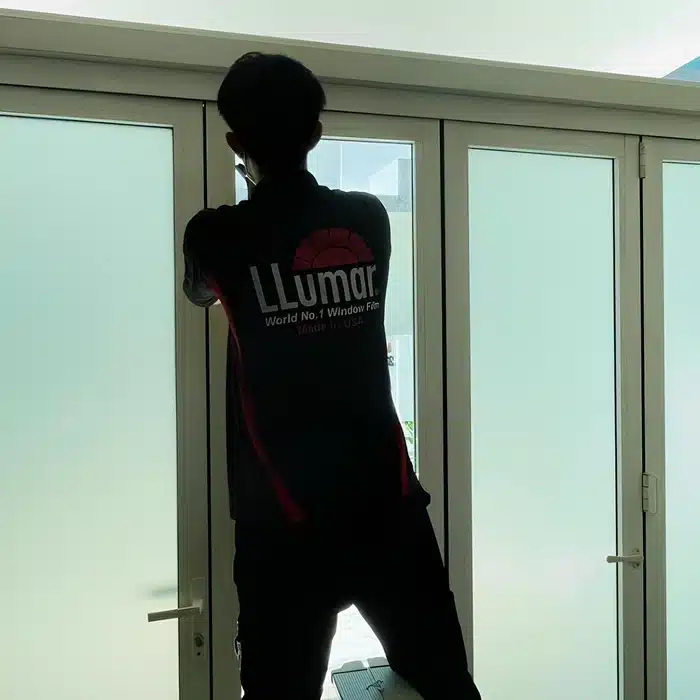
Trusted across Singapore, Window-Cool provides expert installation of window films, blinds, and tinting for HDB flats, condominiums, landed homes, offices, and commercial buildings. Our solutions improve comfort, privacy, and energy efficiency with long-lasting performance for everyday living.


● Featured Projects
Transforming spaces across Singapore
Trusted across Singapore, Window-Cool provides expert installation of window films, blinds, and tinting for HDB flats, condominiums, landed homes, offices, and commercial buildings. Our solutions improve comfort, privacy, and energy efficiency with long-lasting performance for everyday living.
Our Location:
- 50 Serangoon North Ave. 4 #03-03 First Centre, Singapore 555856
Opening Hours:
- Mon - Sat: 9a.m. - 6p.m. PH & Sunday: Closed
Our Location:
- 50 Serangoon North Ave. 4 #03-03 First Centre, Singapore 555856
Opening Hours:
- Mon - Sat: 9a.m. - 6p.m. PH & Sunday: Closed

The Leading Provider of Window Films & Blinds in Singapore Since 1999
© Copyright 2026 windowcool.com
The Leading Provider of Window Films & Blinds in Singapore Since 1999
© Copyright 2026 windowcool.com
Follow Us