

Why Infrared Rejection (IRR)
Matters to
Other Brands
Learn how infrared rejection helps reduce heat and improve comfort
Book Appointment
Why Infrared Rejection (IRR)
Matters to
Other Brands
Learn how infrared rejection helps reduce heat and improve comfort
Book Appointment

● Understand why TSER gives a clearer picture than IR claims alon
Why “99% IR Rejection” Can Be Misleading — And Why TSER Matters More for Window Film Performance
_______
If you have been researching window film in Singapore, you have probably encountered bold claims like “99% Infrared Rejection” across brochures, websites, and advertisements.
At first glance, it sounds impressive.
But here is the reality: IR rejection quoted on its own is often one of the most misunderstood and manipulated figures in the window film industry.
Experienced consultants, architects, and performance-driven installers rarely evaluate a film based on IR rejection alone. Instead, they focus on a more meaningful metric:
TSER — Total Solar Energy Rejected
This number provides a far more accurate indication of how much solar heat a film can actually reduce in real-world conditions.
● Understand why TSER gives a clearer picture than IR claims alon
Why “99% IR Rejection” Can Be Misleading — And Why TSER Matters More for Window Film Performance
_______
If you have been researching window film in Singapore, you have probably encountered bold claims like “99% Infrared Rejection” across brochures, websites, and advertisements.
At first glance, it sounds impressive.
But here is the reality: IR rejection quoted on its own is often one of the most misunderstood and manipulated figures in the window film industry.
Experienced consultants, architects, and performance-driven installers rarely evaluate a film based on IR rejection alone. Instead, they focus on a more meaningful metric:
TSER — Total Solar Energy Rejected
This number provides a far more accurate indication of how much solar heat a film can actually reduce in real-world conditions.
Key Factors That Determine
Window Film Performance
_______
Key Factors That Determine Window Film Performance
_______
To understand why IR rejection alone can be misleading, it helps to first understand how solar energy works.
Sunlight is made up of three major energy bands:
• Ultraviolet (UV): approximately 3%–6%
• Visible Light: approximately 44%
• Infrared Radiation (IR): approximately 50%–53%
Together, these form the total solar spectrum.
Infrared radiation is indeed the largest contributor to heat gain through glass. However, visible light also carries a substantial amount of solar energy. A film that allows large amounts of visible light and solar transmission can still contribute significant heat into a building even if it advertises extremely high IR rejection figures. This is why evaluating only IR rejection gives an incomplete picture of real heat performance.
Here is where the marketing game begins. When some manufacturers advertise:
• 95% IR rejection
• 97% IR rejection
• 99% IR rejection
the figure is often measured only across a narrow infrared wavelength band — commonly around 900nm to 1000nm. The issue is that actual solar infrared energy spans a much wider range: 780nm to 2500nm
A film can achieve extremely high rejection at a narrow wavelength peak while performing significantly less impressively across the broader infrared spectrum encountered in real sunlight. In other words: A film may reject 99% IR at one specific wavelength while allowing considerably more infrared energy through across the full solar range.
That distinction matters.
Many consumers assume “99% IR rejection” means:
• 99% total heat rejection
• 99% cooler interiors
• near-total solar blocking
But technically, that is not what the number means. Without stating:
• the wavelength range tested
• the testing methodology
• the full solar performance data
the IR figure alone can become more of a marketing statistic than a reliable performance indicator.
TSER stands for Total Solar Energy Rejected
Unlike isolated IR measurements, TSER evaluates the total amount of solar energy prevented from entering the glass system, including:
• ultraviolet energy
• visible light energy
• infrared energy
It measures the overall solar heat reduction performance of the glazing system.
The higher the TSER:
• the lower the solar heat entering the room
• the lower the cooling load
• the greater the thermal comfort near windows
This is why two films with similar “99% IR rejection” claims can perform completely differently in actual installations.
Consider this example:
Film A
• Advertised IR rejection: 99%
• TSER: 42%
• High absorption-based ceramic construction
Film B
• Advertised IR rejection: 85%
• TSER: 68%
• Reflective sputtered construction
Despite the lower IR marketing figure, Film B may reduce significantly more total solar heat in real-world conditions.
Why? because total heat rejection is not determined by narrow-band IR performance alone.
A quality sputtered or dual-reflective film can reject energy across a broader portion of the solar spectrum rather than concentrating only on selective infrared peaks.
This distinction becomes especially important in Singapore’s climate.
Singapore experiences:
• strong year-round solar exposure
• prolonged west-facing afternoon heat
• consistently high cooling loads
Different film technologies manage solar energy differently.
Absorptive Films:
Many ceramic or dyed films absorb solar energy into the film and glass system before dissipating it.
Reflective / Sputtered Films:
Sputtered and dual-reflective films reject a larger portion of solar energy outward at the glass surface before it enters the building envelope.
This is one reason why films with lower advertised IR figures can sometimes outperform films with higher IR claims when evaluated by TSER and SHGC.
Another important point many consumers overlook:
A higher TSER does not automatically mean a better film.
A film can achieve very high TSER simply by being:
- extremely dark
- highly reflective
- heavily tinted
This is why professionals compare TSER together with:
VLT — Visible Light Transmission
VLT measures how much natural light passes through the film.
The correct way to evaluate window film performance is:
- compare films within similar VLT ranges
- then evaluate which film delivers better TSER
For example:
Film | VLT | TSER |
Film A | 50% | 39% |
Film B | 50% | 58% |
Film B is significantly more efficient because it rejects more solar energy while maintaining similar brightness levels.
For many Singapore homes and offices, the ideal balance is often:
- VLT between 40%–60%
- lower SHGC values
- higher TSER without excessive darkening
This helps maintain:
- daylight
- outside visibility
- occupant comfort
- reduced glare
- lower air-conditioning demand
Another specification worth understanding is:
SHGC — Solar Heat Gain Coefficient
SHGC measures how much solar heat passes through the glazing system.
Lower SHGC means:
• less solar heat enters the room
• better thermal performance
TSER and SHGC are directly related:
TSER=(1-SHGC)\times100
Higher TSER corresponds to lower SHGC.
For west-facing Singapore windows exposed to intense afternoon sun, lower SHGC values can substantially improve indoor comfort and reduce cooling loads.
Reliable solar performance data should be backed by recognised industry standards such as:
• NFRC 200
• ASTM E903
• ISO 9050
These standards help ensure:
• consistent testing methodology
• fair comparison between products
• verified solar performance measurements
If a specification sheet heavily promotes IR rejection but omits:
• TSER
• SHGC
• VLT
• certified testing standards
you should request complete performance data before making a decision.
Any reputable installer using certified architectural film brands should be able to provide full performance specifications.
The Right Questions to Ask Any Window Film Installer
The next time someone promotes “99% IR rejection,” ask these questions:
What is the TSER?
2. What is the SHGC?
3. What is the VLT?
4. What wavelength range was the IR rejection measured across?
5. Was the performance tested under NFRC or ISO standards?
Those answers will reveal far more about actual performance than a standalone IR number.
IR Rejection vs TSER: The Real Difference
Metric | Common Marketing Usage | Proper Evaluation |
IR Rejection | Often measured at selective wavelengths | Should specify full IR wavelength range |
TSER | Sometimes omitted entirely | Most important overall heat rejection metric |
SHGC | Rarely explained to consumers | Critical for glazing energy performance |
VLT | Hidden behind high TSER claims | Must be evaluated together with TSER |
Reflectivity | Often ignored in brochures | Affects glare, appearance, and outward rejection |
Choosing the Right Window Film for Singapore
For Singapore’s equatorial climate, window film selection should focus on:
• overall solar energy rejection
• glazing compatibility
• daylight balance
• long-term durability
• verified performance standards
A film marketed heavily around IR rejection alone may not necessarily provide superior real-world thermal performance. The complete performance profile matters because ultimately: IR rejection is only one component of solar control performance — not a substitute for it.
Frequently Asked Questions
About Infrared Rejection (IRR)
_______
Frequently Asked Questions About LLumar Spectrally Selective Film
_______
Yes, but it is often measured only within a narrow infrared wavelength range rather than across the full solar infrared spectrum.
TSER is generally more important because it measures total solar energy rejection across UV, visible light, and infrared energy combined.
Because total heat reduction depends on full-spectrum solar rejection, not narrow-band infrared performance alone.
This depends on the glass type, orientation, and desired brightness, but higher TSER values generally reduce solar heat gain more effectively.
TSER and SHGC are directly related measurements of solar heat performance. Higher TSER corresponds to lower SHGC.
Not necessarily. Some darker films mainly reduce visible light without delivering proportionally better total solar energy rejection.
No. Different technologies serve different applications. Some sputtered and dual-reflective films can outperform ceramic films in total solar energy rejection.
NFRC-certified data provides standardised testing and allows accurate comparison between different window film products.
Window-Cool is an authorised LLumar installer in Singapore. LLumar architectural films are tested to recognised industry standards with full TSER, SHGC, and VLT performance data available upon request.
Ready to transform your space?
Book a free on-site consultation and get expert recommendation
Ready to transform your space?
Book a free on-site consultation and get expert recommendation
● Featured Projects
Transforming spaces across Singapore
Trusted across Singapore, Window-Cool provides expert installation of window films, blinds, and tinting for HDB flats, condominiums, landed homes, offices, and commercial buildings. Our solutions improve comfort, privacy, and energy efficiency with long-lasting performance for everyday living.
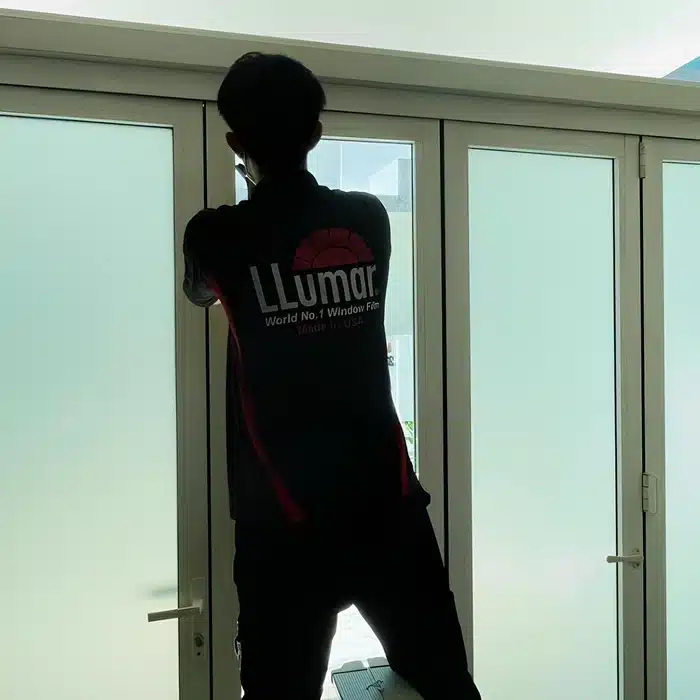


● Featured Projects
Transforming spaces across Singapore
Trusted across Singapore, Window-Cool provides expert installation of window films, blinds, and tinting for HDB flats, condominiums, landed homes, offices, and commercial buildings. Our solutions improve comfort, privacy, and energy efficiency with long-lasting performance for everyday living.
Our Location:
- 50 Serangoon North Ave. 4 #03-03 First Centre, Singapore 555856
Opening Hours:
- Mon - Sat: 9a.m. - 6p.m. PH & Sunday: Closed
Our Location:
- 50 Serangoon North Ave. 4 #03-03 First Centre, Singapore 555856
Opening Hours:
- Mon - Sat: 9a.m. - 6p.m. PH & Sunday: Closed

The Leading Provider of Window Films & Blinds in Singapore Since 1999
© Copyright 2026 windowcool.com
The Leading Provider of Window Films & Blinds in Singapore Since 1999
© Copyright 2026 windowcool.com
Follow Us